
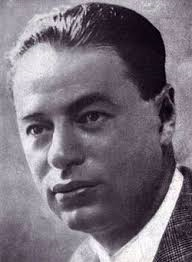


Árpád Weisz was born in Hungary on 16ᵗʰ April 1896 to a Jewish family.
He was a soccer player both in his homeland and in other countries, such as Italy, where he was co-author of the handbook “Il giuoco del calcio” (“The Game of Soccer”).
He was the youngest coach to be crowned Italian champion in
1929-1930, with the team Ambrosiana-Inter.
From 1935 on he coached the Bologna team, winning two championships and
the tournament of the Universal Exposition, held in Paris in 1937.
The Racial Laws of 1938 forced Weisz and his family to flee first to
Paris and then to Dordrecht, in the Netherlands. During the German
occupation they were all arrested: in 1942 his wife and children were
gassed in Birkenau, Árpád died in Auschwitz on 31ˢᵗ January 1944.
The history of Árpád Weisz and his family reminds us of persecutions:
the exclusion from work and from school, the impossibility to practice
or just watch any sports. Their experience tells us about the injustice
that affects even those who have no fault.
Árpád Weisz is an example of how bad conscience forgot, for sixty
years, people who deserve to be remembered.
Árpád Weisz, a young people talent scout, and his son Roberto help us to
promote the long lasting meaning of friendship among young people and
memories of schooldays as a source of historical, emotional, personal
and folk memory.